DOCUMENTED FACT C001
At least 15,000 veteran families have already been foreclosed on or displaced.
Figure stated by Sen. Blumenthal at the SVAC hearing, 5/20/26.
Veterans Foreclosure Crisis
Evidence & oversight
Every claim below carries a content label, a primary source, a plain-language definition, its limitation, and the date it was last verified. Filter by label or search the text. Full source register: data & methods.
On this page ↓ Quotes on the record · Family voices · For Reporters
The rebuttal library
Twenty-one fact-led rebuttals of the lines the VA and servicers recycle, each with rule text and a citation. Eight more are held until their receipts are captured. Pattern-level, no names.
Read the Rebuttal Index →② Why it matters · On the record
Words on the record, in a family’s own voice, and where they were said. The full, filterable claim library, every stat with its source, label, and date, is below. Definitions live in Data & Methods; press contact and ground rules are on For Reporters.
Quotes on the record, with citations
“Foreclosure. Period.”
Mortgage Bankers Association (Elizabeth Balce) on the consequence of ending VASP, March 2025, establishes foreseeability. Source ↗
The VA must pause foreclosures until the new assistance program is actually accessible.
National Consumer Law Center, June 15, 2026. Read the statement ↗
Twenty-eight members of the House demanded the VA establish a targeted foreclosure moratorium.
Rep. Chris Pappas + 27 colleagues, May 26, 2026. Read the letter ↗
② Why it matters · On the record
FAMILY’S OWN PUBLIC MATERIALSMaterials a cohort family has published themselves or given on camera. We link the original, don’t restate case details, and no minor is named or shown.
Leann Ledford, project lead, on the MS NOW Weekend Primetime panel, the crisis in a family’s own voice.
Watch the clip →A self-published essay: “We were not allowed to pay our mortgage.” The forbearance-to-foreclosure arc, first-hand.
Read the essay →A cohort family’s own GoFundMe, the household-level stakes behind the cohort numbers.
See the page →Published at the family’s choice; no case numbers, no minor named or shown, full firewall policy →
Working on a story?
Contact and response expectations, downloads (One-Pager, First 72 Hours, cleaned CSVs), the source bundle and interview requests, interview protocol and ground rules, and background reading, all on one page.
Go to For Reporters →Search the register or filter by claim type. Each entry carries its source, its limitation and the date it was last verified.
Filter by type
All 58 claims shown
No claim matches that search or filter.
DOCUMENTED FACT C001
At least 15,000 veteran families have already been foreclosed on or displaced.
Figure stated by Sen. Blumenthal at the SVAC hearing, 5/20/26.
DOCUMENTED FACT C002
More than 90,000 veteran homeowners are behind on their loans or in the foreclosure process.
NPR/ICE data 4/2/26; NCLC put ~31,500 in active foreclosure.
DOCUMENTED FACT C003
About 160,000 veteran families are impacted in total.
Foreclosed + in the pipeline + forced into unaffordable modifications or short sales.
DOCUMENTED FACT C004
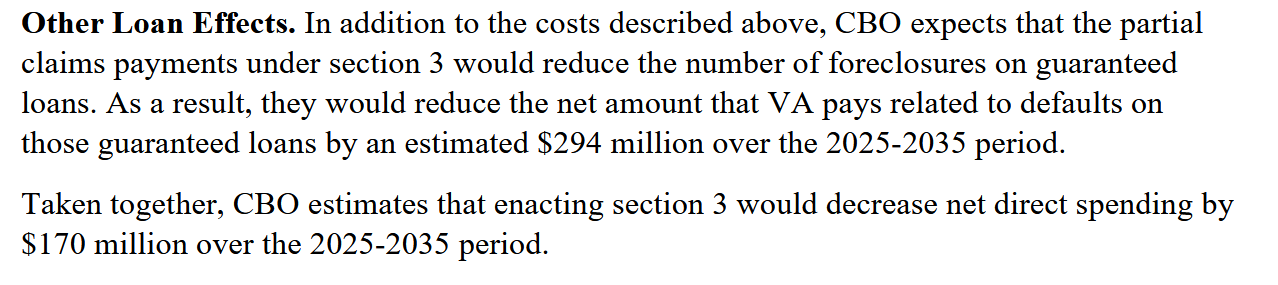
The permanent partial claim was scored as net savings; foreclosure is the more expensive option.
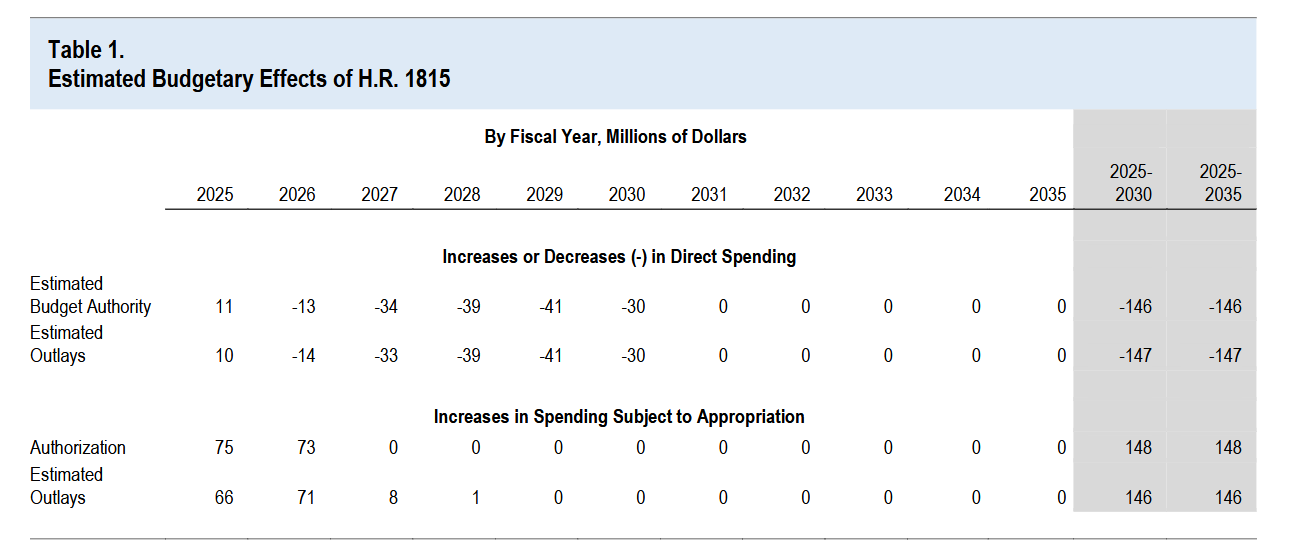
$147 million in net savings over ten years (CBO; H. Rept. 119-104). See C013 for the avoided foreclosure-related payments.
DOCUMENTED FACT C005
The average VA foreclosure loss is roughly $72,000 to $74,000.
NCLC ~$72,000; CRL ~$74,000 (~$73,750 per disposition).
DOCUMENTED FACT C006
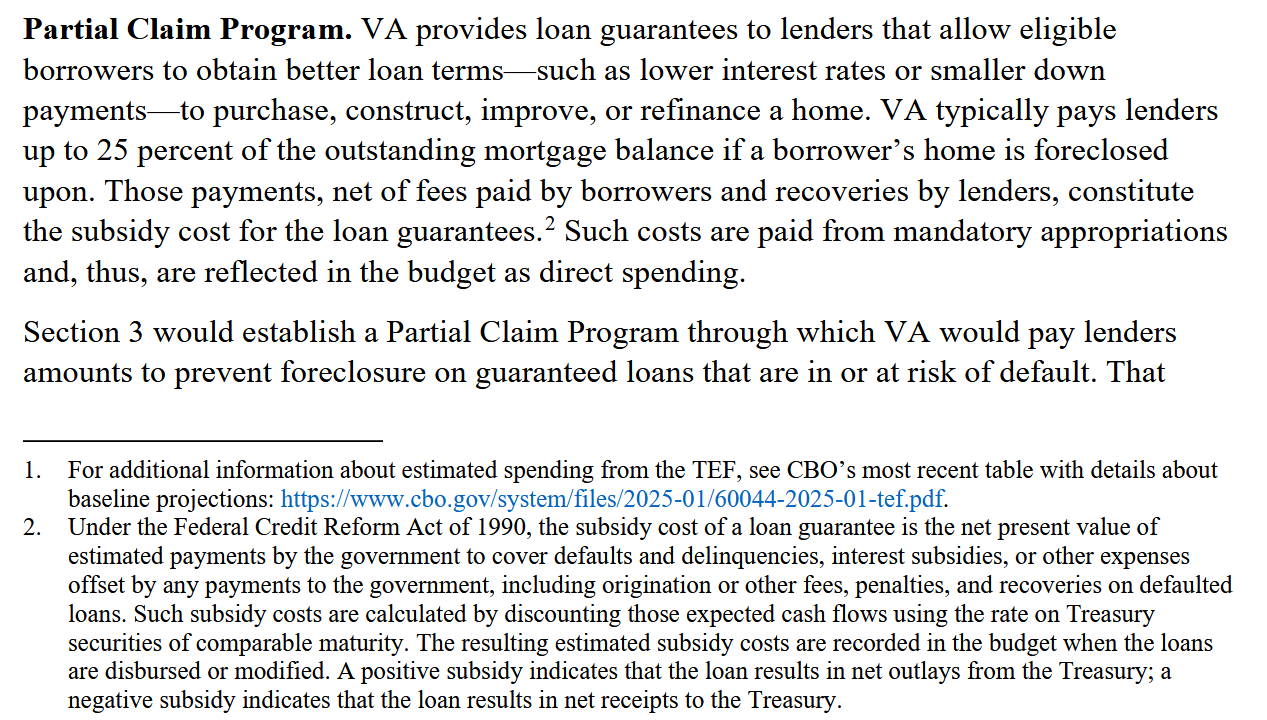
Congress granted permanent partial-claim authority and a directed waterfall; it did not write the exclusionary gates.
Active-default, current-servicer, and 3-month-trial requirements are VA design choices in M26-4 Ch.22.
DOCUMENTED FACT C007
CARES Act forbearance was universal; only VA borrowers lost their same-rate exit.
Civilian comparison: FHA/Fannie/Freddie kept a permanent same-rate exit.
DOCUMENTED FACT C008
Biden’s VA ended the COVID partial claim in Oct 2022; Trump’s VA killed VASP in May 2025.
Two-administrations framing; VASP killed effective 5/1/25 on ~8 days notice.
DOCUMENTED FACT C009
The VA takes about 75% of foreclosed veteran homes into its REO inventory.
Auction.com data; +428% YoY auction supply.
DOCUMENTED FACT C010
The VA says it helped 173,000 veterans avoid foreclosure in FY2025.
The VA’s counter-number, stated in its own June 15, 2026 launch press release: VA “worked with mortgage servicers to help 173,000 Veterans” in FY2025.
DOCUMENTED FACT C011
The partial claim is not actually available until servicers implement it, deadline Nov 28, 2026.
Until a servicer publishes its own ETA, assume the program is available nowhere.
DOCUMENTED FACT C012
The VA had separate authority all year to protect families immediately and chose not to use it.
Part 36 tools + Section 3(h); the exclusion of displaced families is reversible without new legislation.
DOCUMENTED FACT C013
CBO projected $294 million in avoided foreclosure-related payments.
Component of the fiscal case, H. Rept. 119-104.
DOCUMENTED FACT C014
In November 2025 Congress expanded the Secretary’s emergency authority to help veteran families before regulations issue.
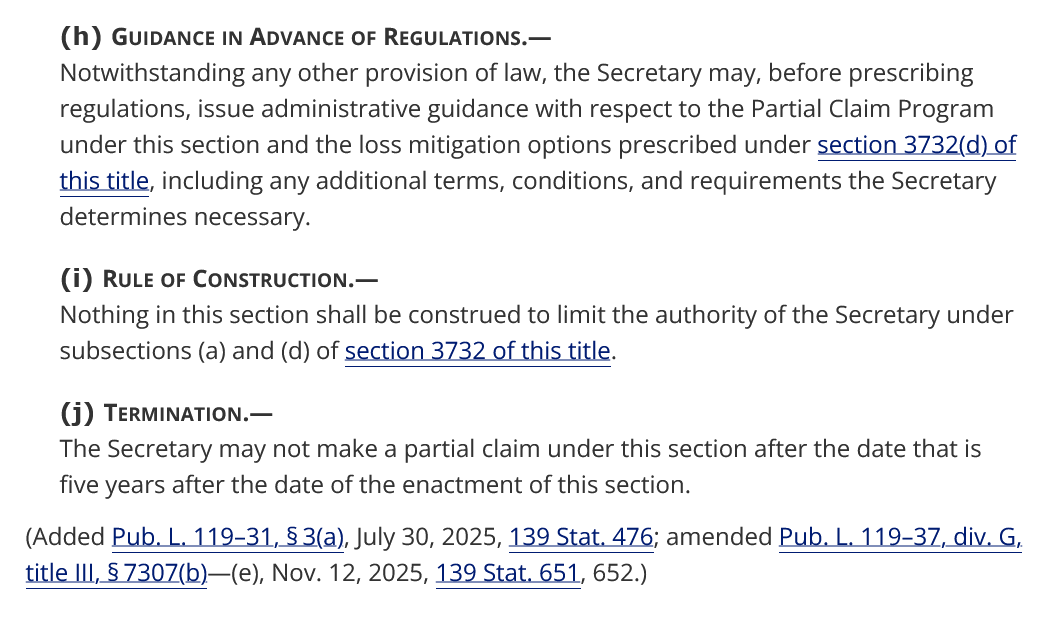
Pub. L. 119-37 §7307(e) removed the day-of-signing default requirement; the Secretary may issue administrative guidance for the Partial Claim Program and required loss-mitigation options (38 U.S.C. §3737(h) as amended; 139 Stat. 651).
DOCUMENTED FACT C015
The program running today operates under this authority: VA’s June 1, 2026 handbook is pre-regulation guidance invoking the Secretary’s §3737 discretion.
M26-4 Ch. 22 is pre-regulation guidance under §3737.
PROJECT ANALYSIS C016
The Department cannot say it lacks authority to reach the families its eligibility gates exclude; the gates are handbook choices, reversible by the same pen that wrote them.
Authority exists, Congress broadened it, and VA is actively using it for everyone except the families already harmed.
DOCUMENTED FACT C017
When VASP was cancelled, roughly 75,000 veteran borrowers were three or more payments behind; about 17,000 had been accepted into the program; 58,000+ had no path in.
ICE Mortgage Technology via NPR (4/2/26) and CNN (4/30/25). Only a servicer could submit a borrower. A veteran could not apply for themselves.
DOCUMENTED FACT C018
The partial-claim rule’s only borrower-capacity test is whether the veteran can resume the scheduled monthly payment.
38 C.F.R. §36.4803(d). There is no resolved-hardship condition. That belongs to the modification rule, not this one.
DOCUMENTED FACT C019
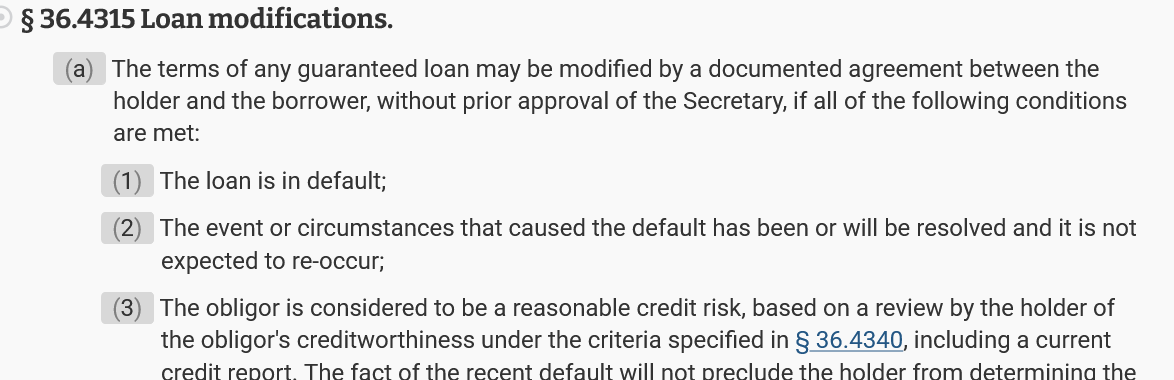
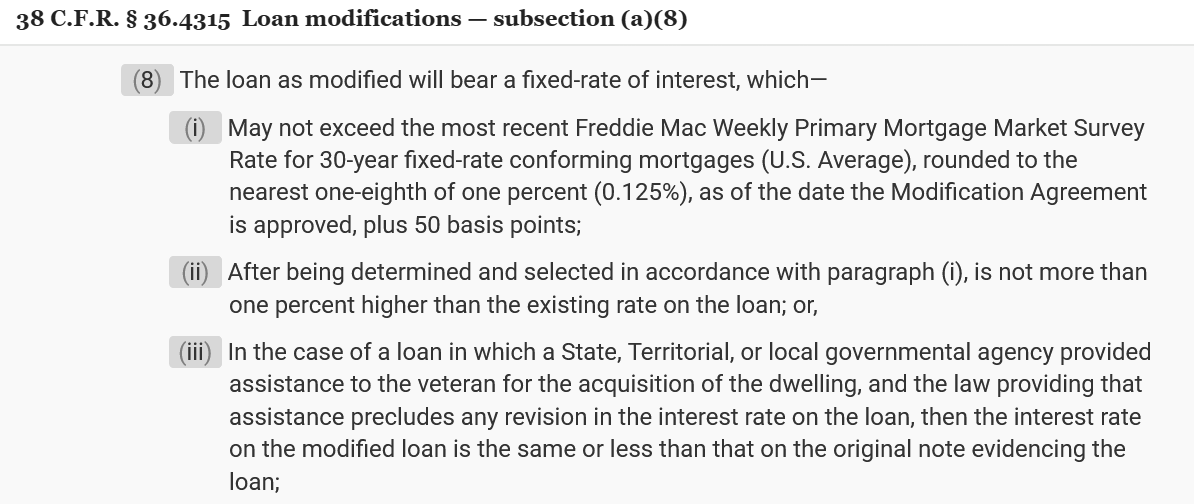
Loan modifications require a resolved hardship and cap the rate at one percent above the existing rate absent prior VA approval.
38 C.F.R. §36.4315(a)(2) and (a)(8).
DOCUMENTED FACT C020
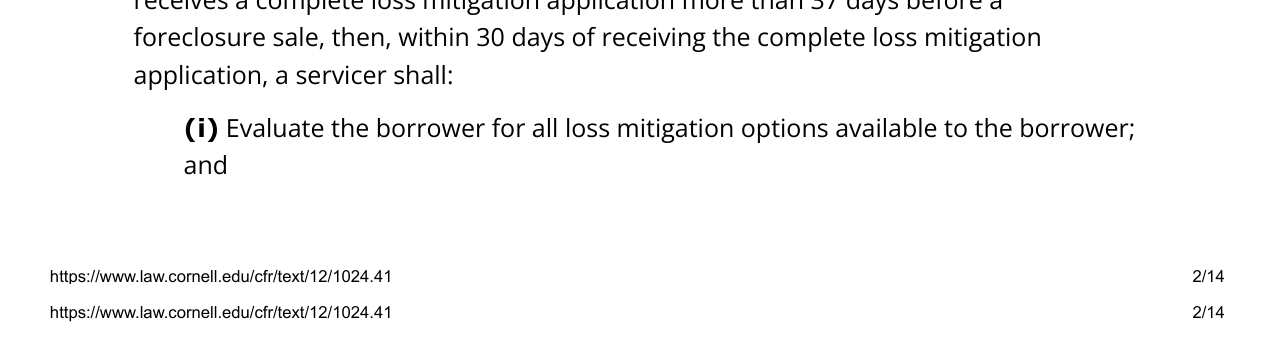
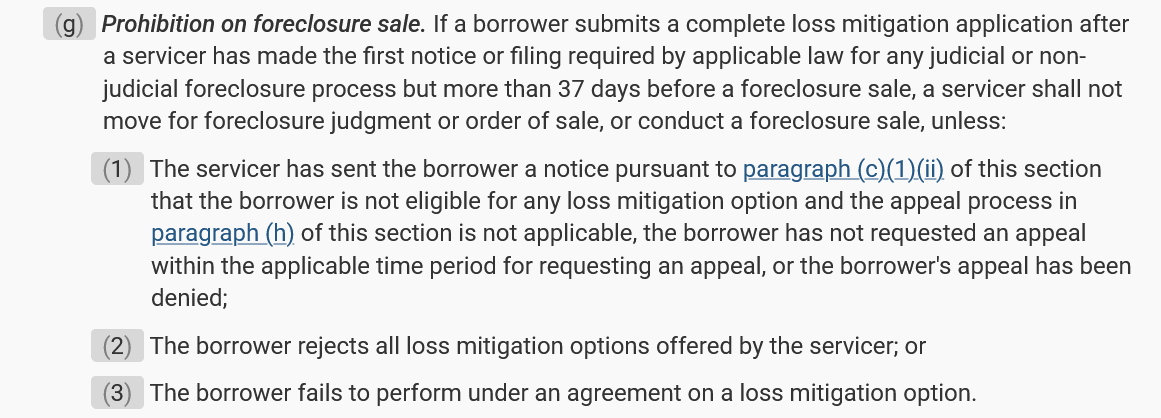
Regulation X required servicers to evaluate a complete application against all options in 30 days, give a specific reason per denial, and not dual-track.
12 C.F.R. §1024.41(c)(1), (d), (f) and (g). “Not reviewed” is not a specific reason.
DOCUMENTED FACT C021
VA has described its loss-mitigation options as a hierarchy for review, and paid servicer incentives on it, since 2008.
38 C.F.R. §36.4319(a).
DOCUMENTED FACT C022
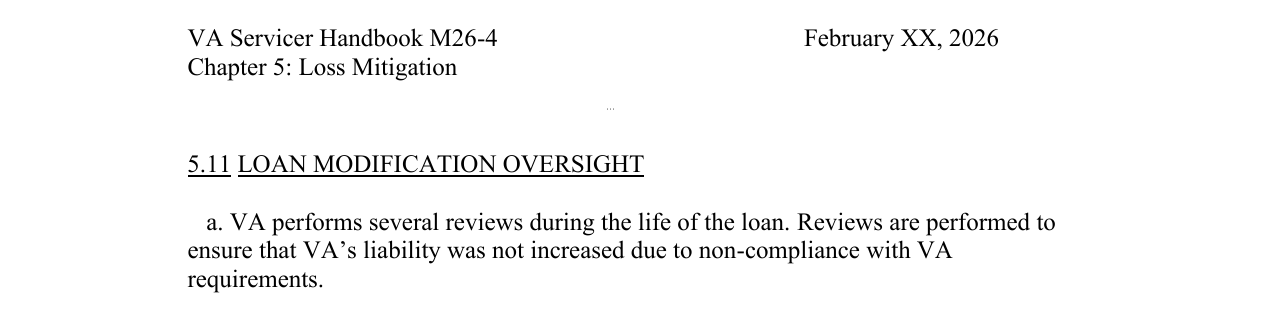
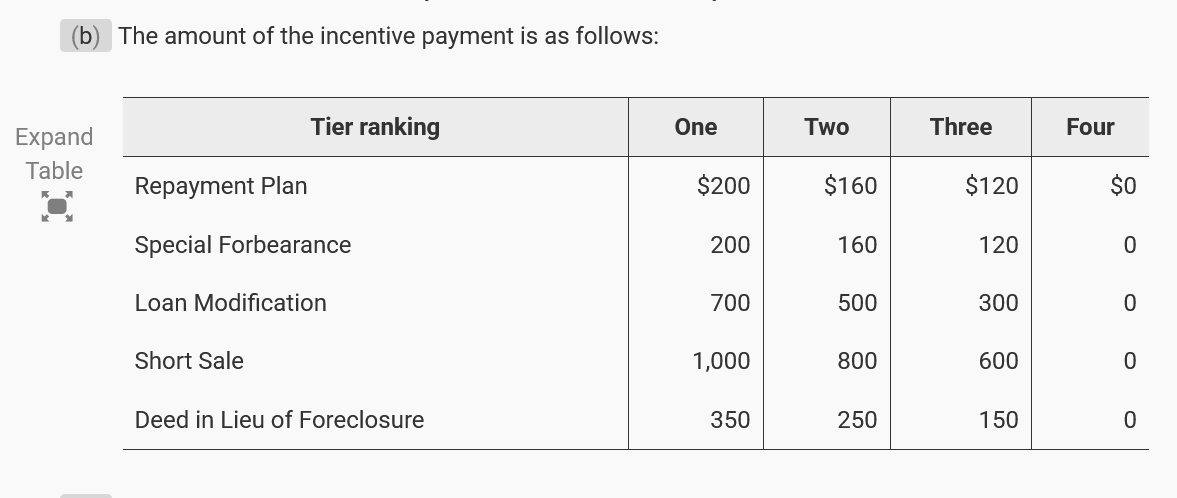
VA built VALERI to determine servicer compliance and may inspect a servicer’s complete delinquent-loan file on request.
38 C.F.R. §36.4350(j); M26-4 Chapter 5, §5.11.
DOCUMENTED FACT C023
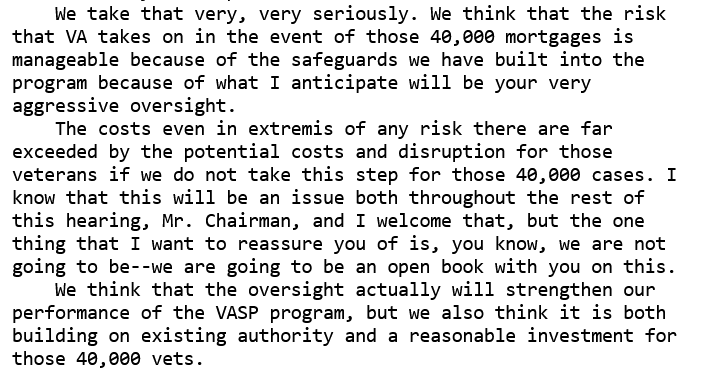
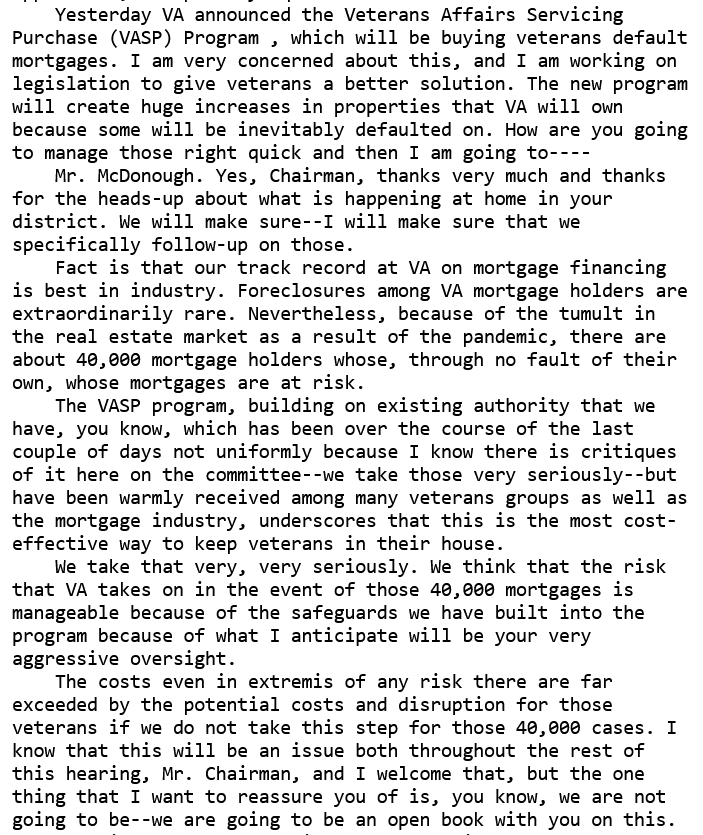
VA’s April 2024 launch materials stated it had existing authority to establish VASP under 38 U.S.C. §3732 and §3720.
The Department said so twice in April 2024: in the launch materials, and on the record to the House Veterans’ Affairs Committee on April 11, 2024, where Secretary Denis McDonough described VASP as “building on existing authority that we have.” No GAO, CRS, OGC or court ruling ever held otherwise; the “lacks authority” line began as a press statement.
DOCUMENTED FACT C024
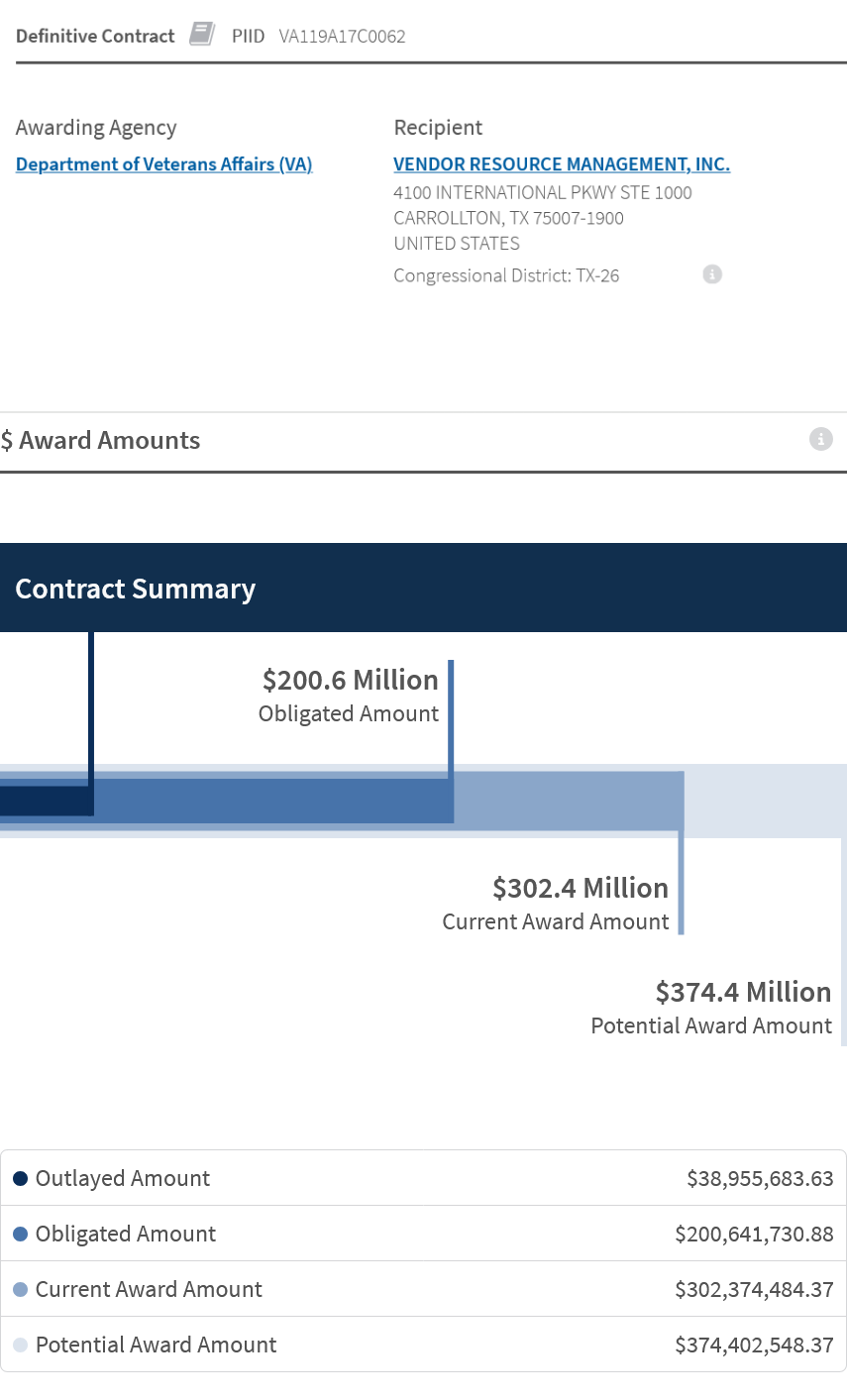
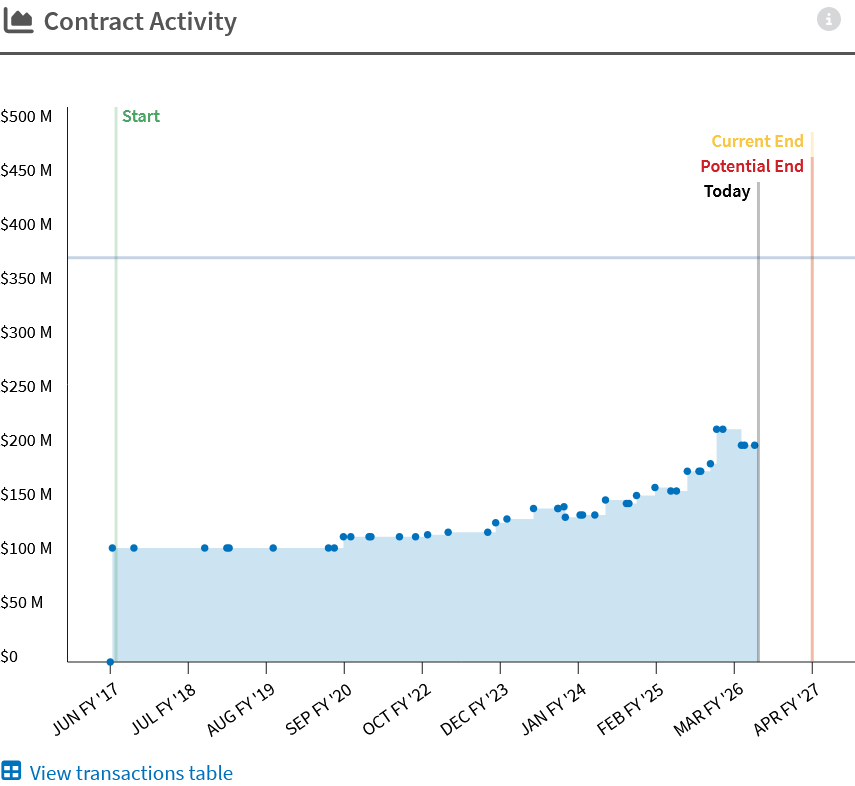
Post-foreclosure evictions of veteran families are filed in the Secretary’s name via a VA REO contractor under a federal contract worth up to $374.4 million.
Vendor Resource Management, Inc., PIID VA119A17C0062: $200.6M obligated against a $302.4M current award and a $374.4M ceiling.
DOCUMENTED FACT C025
The 180-day servicer implementation runway was the mortgage industry’s own request, granted in full.
MBA and CHLA each asked VA for at least 180 days of lead time in March 2026 comment letters; the final policy set exactly 180 days from the June 1 publication, landing on November 28, 2026.
DOCUMENTED FACT C026
Foreclosure activity is climbing while the partial claim is still not running.
ATTOM counted 227,548 U.S. properties with foreclosure filings in the first half of 2026, up 21% year over year and 28% above the first half of 2024. The stress sits in government-backed loans: FHA delinquency 11.88% and VA 4.99% in Q1 2026, against 2.75% conventional. An industry loss-mitigation executive whose firm serves 59 servicers expects FHA and VA foreclosures could more than double by autumn 2027.
DOCUMENTED FACT C027
The outcome was named in advance, repeatedly, by the industry, advocates, national press and Congress.
A chronological record of warnings from March 2025 to July 2026: MBA (“Foreclosure. Period.”), CNN on the eight-day VASP cancellation, a servicing executive warning clients from July 2025, MBA and CHLA comment letters, NPR, Newsweek, MBA delinquency data, Sen. Blumenthal before SVAC, ABA on the final policy, local broadcast coverage, and the ATTOM mid-year data.
DOCUMENTED FACT C028
Low-income veteran households get inadequate or no professional legal help for the overwhelming majority of their civil legal problems.
LSC’s 2017 Justice Gap survey found that 71% of low-income households with veterans or other military personnel had a civil legal problem in the past year, that they sought professional legal help for only 21% of those problems, and that an estimated 88% received inadequate or no professional legal help.
DOCUMENTED FACT C029
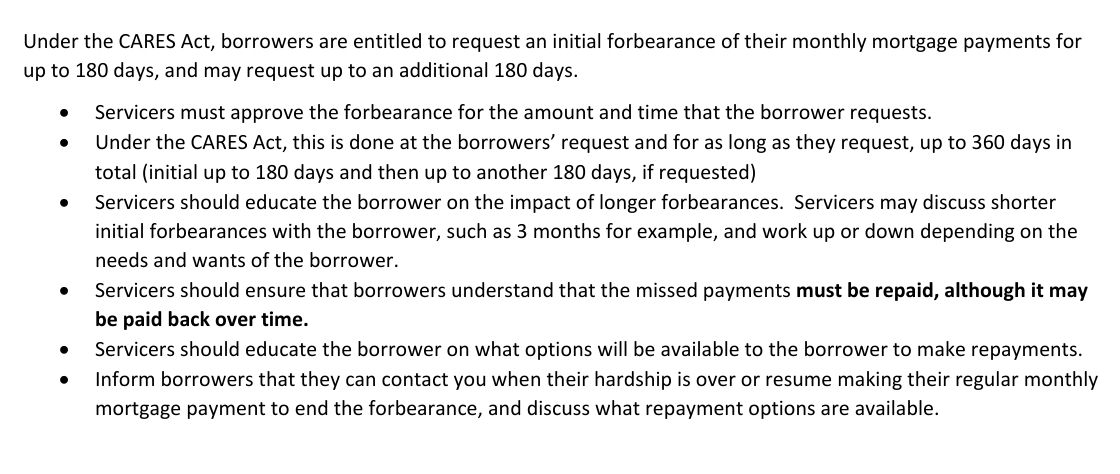
Families who took a COVID-19 forbearance were told, in VA’s own guidance, that the missed payments would not have to be repaid in a single payment.
VA’s CARES Act guidance for borrowers with VA-guaranteed home loans set out forbearance of up to 180 days on request with a further 180 available, obtained by notifying the servicer, and stated plainly that the payments missed during forbearance “do not have to be made up in a single payment.”
DOCUMENTED FACT C030
The partial claim veterans used during the pandemic came from CARES Act authority that expired in 2021, leaving VA the only federal home loan program without one.
The sponsor summary for H.R. 1815, the VA Home Loan Program Reform Act of 2025, states that veterans could use a partial claim under CARES Act authority, that those authorities expired in 2021, and that every other federal home loan program offers a partial claim retention option except VA, which is what the Act was written to fix.
DOCUMENTED FACT C031
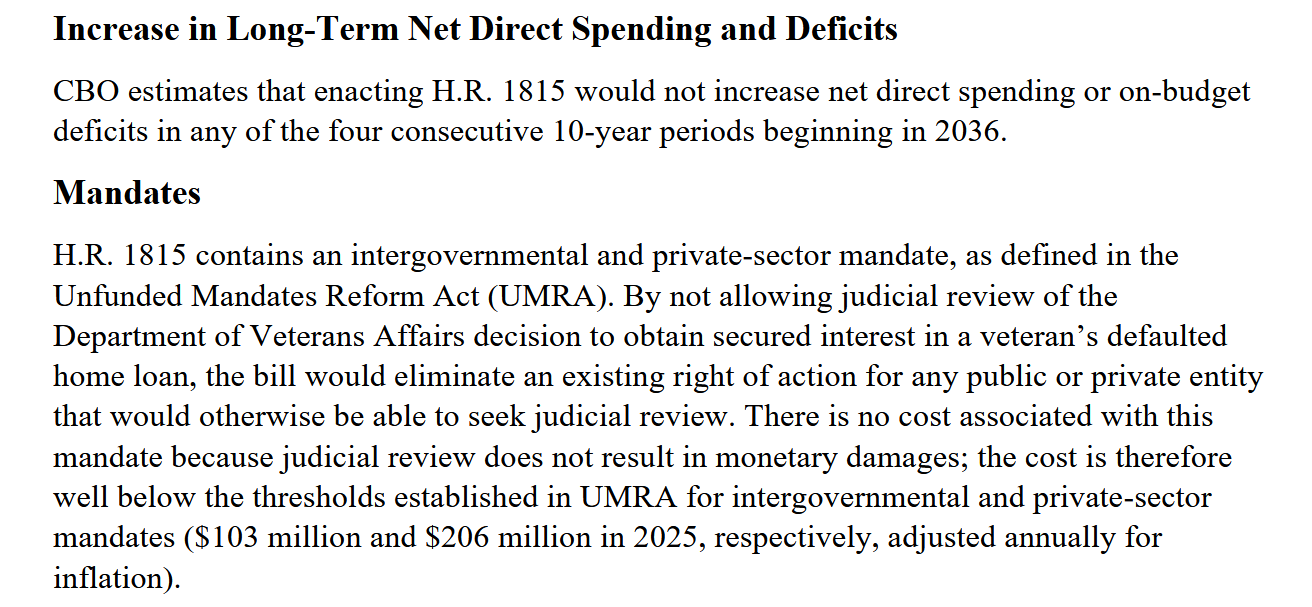
H.R. 1815, as CBO scored it, eliminates judicial review of VA’s decision to take a secured interest in a veteran’s defaulted home loan.
The CBO cost estimate for H.R. 1815 records, under Mandates, that by not allowing judicial review of the Department of Veterans Affairs decision to obtain secured interest in a veteran’s defaulted home loan, the bill would eliminate an existing right of action for any public or private entity that would otherwise be able to seek judicial review, and assigns the mandate no cost because judicial review does not result in monetary damages.
DOCUMENTED FACT C032
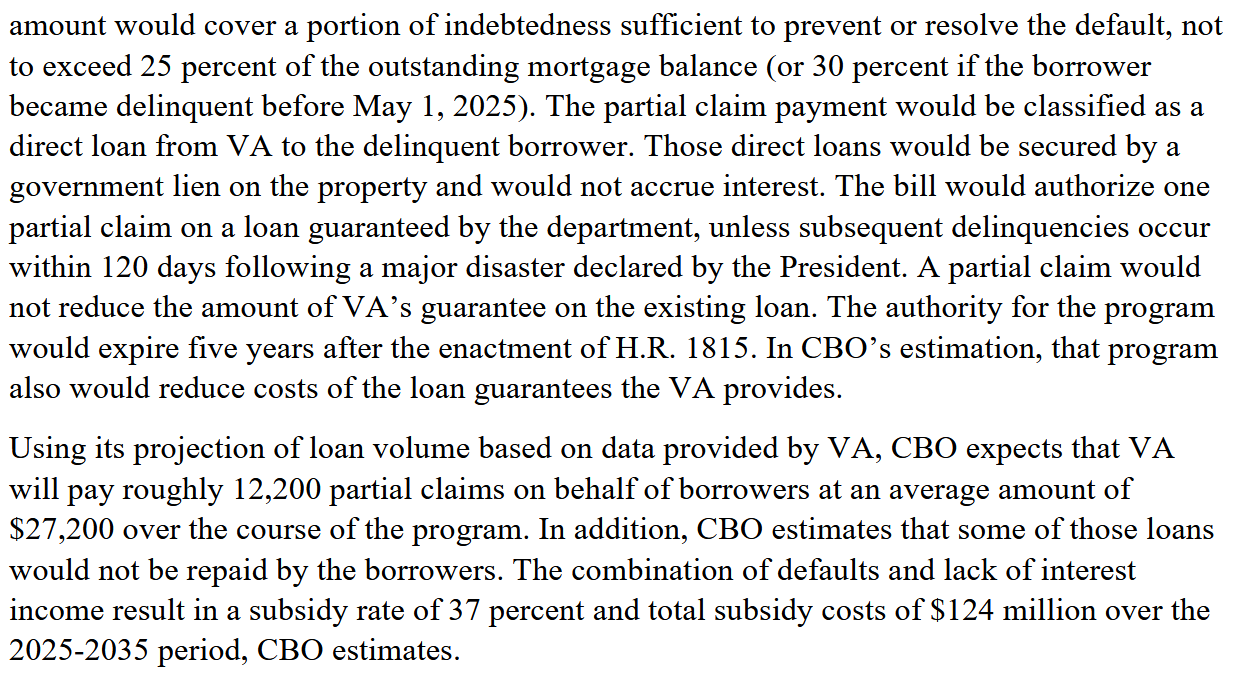
The partial claim was scored for roughly 12,200 claims averaging $27,200, with the authority expiring five years after enactment.
Using VA-provided loan-volume data, CBO expected VA to pay roughly 12,200 partial claims at an average of $27,200 over the course of the program, with a 37 percent subsidy rate and $124 million in subsidy costs over 2025-2035; the estimate also records that the program authority would expire five years after enactment, and that claims are capped at 25 percent of the outstanding balance, or 30 percent for borrowers delinquent before May 1, 2025.
DOCUMENTED FACT C033
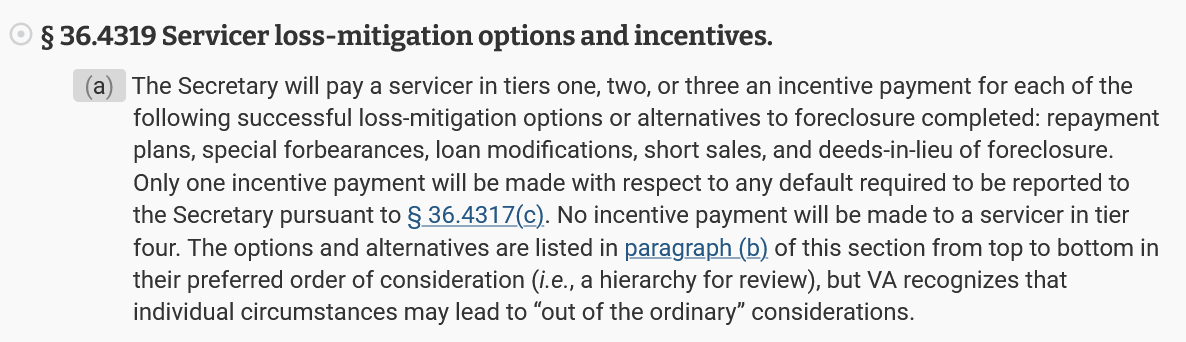
VA’s regulation pays a servicer at most $1,000 for a successful loss-mitigation outcome, and the largest incentive in the schedule is for a short sale.
38 C.F.R. § 36.4319(b) sets the incentive payment by outcome and servicer tier ranking: repayment plan $200 / $160 / $120 / $0; special forbearance the same; loan modification $700 / $500 / $300 / $0; short sale $1,000 / $800 / $600 / $0; deed-in-lieu $350 / $250 / $150 / $0. Tier Four pays nothing for any outcome, and § 36.4319(e) reserves the Secretary’s right to stop an incentive payment where the servicer fails to perform adequate servicing.
PROJECT ANALYSIS C034
The money in VA’s rules does not point toward keeping families in their homes.
A successful loan modification pays the servicer $700 at the top tier under 38 C.F.R. § 36.4319(b), while CBO records that VA typically pays lenders up to 25 percent of the outstanding mortgage balance when a borrower’s home is foreclosed upon, up to $75,000 on a $300,000 balance. This project reads that gap as an absence of financial pull toward retention, and as a reason not to rely on servicer initiative to reach families already in default.
DOCUMENTED FACT C035
VA told Congress in February 2024 that it could not offer a partial claim, and explained the risk-share reason why.
In written testimony to the House Veterans’ Affairs Subcommittee on Economic Opportunity, VA’s Executive Director of Loan Guaranty Service stated that unlike HUD and USDA, VA “does not have explicit authority to advance guaranty funds as a loss mitigation option” and “cannot offer a partial claim that pulls from the amount VA guaranteed”; that it had been VA’s “longstanding and public position that Congress never authorized a partial advance on the guaranty without termination of the loan”; and that the lack of authority “may be because VA only carries 25% of the risk of a default through its guaranty, where the other Federal programs carry 90% or more of default risk.” The same statement records that the COVID-VAPCP Program expired October 28, 2022, and that the program “began to incur a cost for each new guaranteed loan commitment.”
DOCUMENTED FACT C036
VA’s own February 2024 numbers: more than 200,000 veterans affected by the COVID-19 emergency, more than 50,000 assisted through its temporary retention options.
The same written statement reports “more than 200,000 Veterans affected by the COVID-19 national emergency (more than 50,000 of whom were assisted through VA’s temporary COVID-19 home retention options),” and separately that “over the past year, more than 145,000 Veterans and their families have been able to retain their homes and avoid foreclosure because of VA’s assistance.”
DOCUMENTED FACT C037
A year before Congress acted, independent housing-finance analysts had already documented that VA had the most limited loss-mitigation options of any federal program and told Congress what was needed.
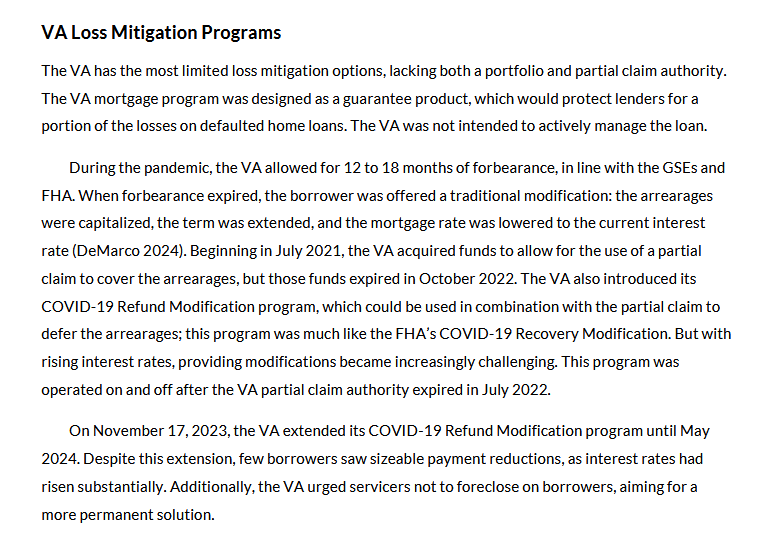
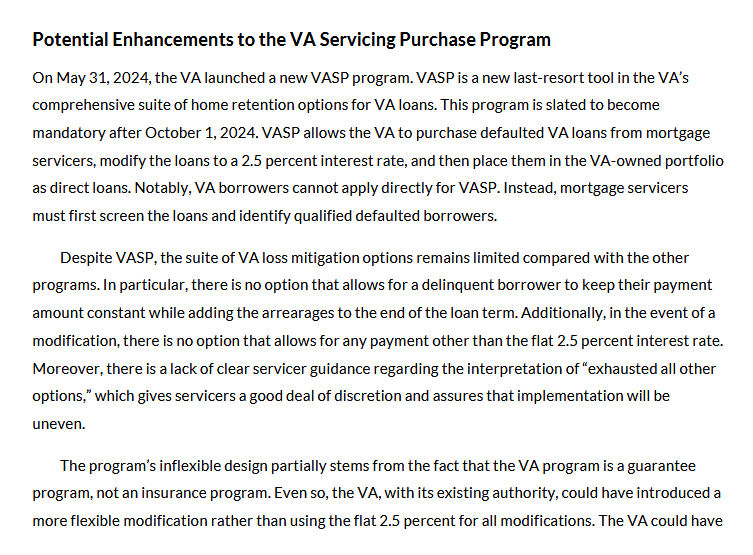
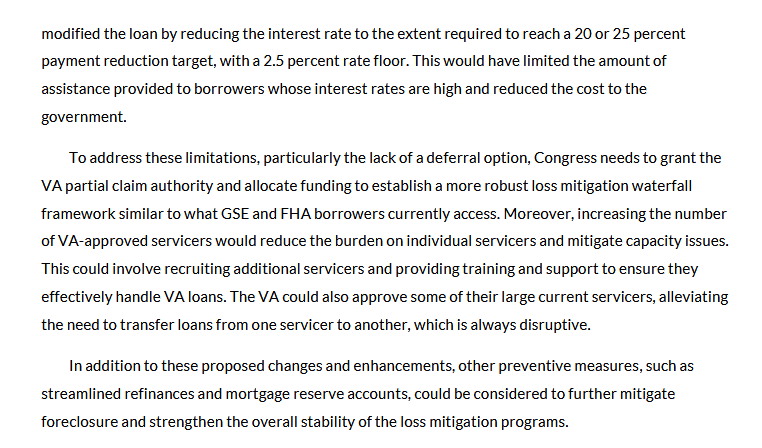
The Urban Institute’s July 2024 study states that “the VA has the most limited loss mitigation options, lacking both a portfolio and partial claim authority,” and recommends that “Congress needs to grant the VA partial claim authority and allocate funding to establish a more robust loss mitigation waterfall framework similar to what GSE and FHA borrowers currently access.” It also records that VA acquired partial-claim funds in July 2021 and that those funds expired in October 2022, leaving the gap that ran until Pub. L. 119-31.
DOCUMENTED FACT C038
Uneven servicer implementation of VASP was predicted in print, before the harm, because VA never defined the standard servicers had to apply.
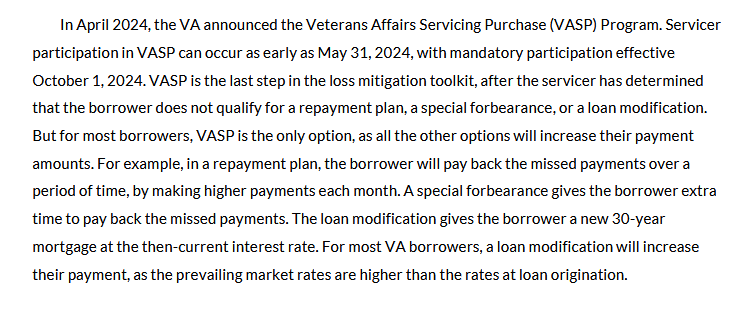
The Urban Institute wrote in July 2024 that “there is a lack of clear servicer guidance regarding the interpretation of ‘exhausted all other options,’ which gives servicers a good deal of discretion and assures that implementation will be uneven.” The same paper records that VA borrowers could not apply for VASP directly, servicers screened and identified qualified borrowers.
DOCUMENTED FACT C039
Analysts noted at the time that VA could have built a more flexible modification under the authority it already had.
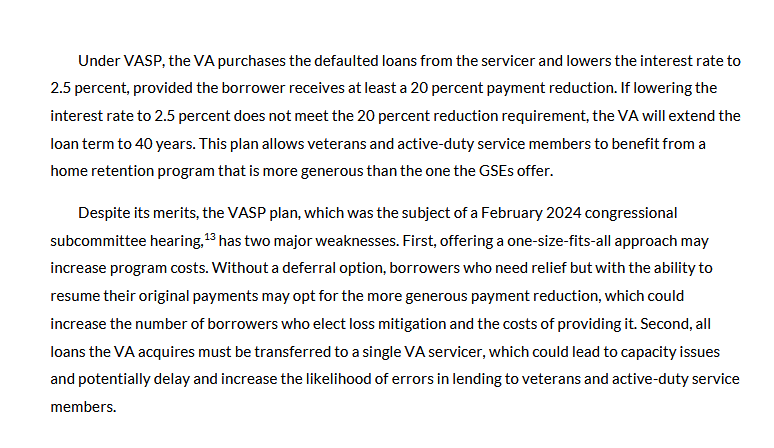
On VASP’s flat 2.5 percent rate, the Urban Institute wrote that “the VA, with its existing authority, could have introduced a more flexible modification rather than using the flat 2.5 percent for all modifications,” and set out an alternative targeting a 20 to 25 percent payment reduction with a 2.5 percent floor, which would have “reduced the cost to the government.” The paper also records that for most VA borrowers a standard loan modification raises the monthly payment, because prevailing rates exceed origination rates.
DOCUMENTED FACT C040
VA’s own borrower FAQ warned that short sale and deed in lieu “could result in a loss or reduction in your future home loan benefit.”
In the CARES Act FAQ for VA home loan borrowers, question 13 lists private sale, short sale and deed in lieu as the options for a borrower who cannot resume payments, and attaches the same italicised caution to two of the three: “This option could result in a loss or reduction in your future home loan benefit.” The Department set out the benefit consequence in the same guidance that offered the exit.
DOCUMENTED FACT C041
Both COVID-era partial-claim options were gated on a borrower’s status in March 2020 and closed on fixed dates.
VA’s FAQ states that COVID-VAPCP applicants “must have been on a COVID forbearance, occupy the property as a main residence and have been current or within 30 days of current on March 1, 2020,” and that the program “will only be available from July 27, 2021 through October 28, 2022.” The COVID-19 Refund Modification required a borrower to have been “within 120 days current on March 1, 2020” and ran “from July 27, 2021 through July 1, 2023.”
DOCUMENTED FACT C042
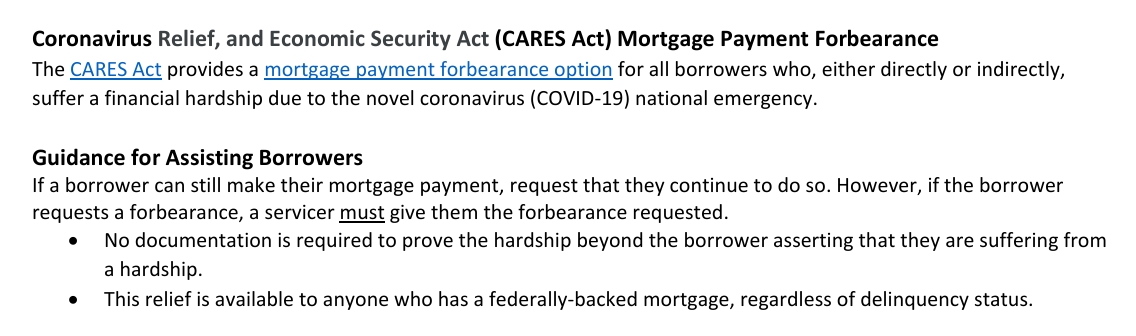
Entry into CARES forbearance was mandatory on request, without documentation, regardless of whether the borrower was already behind.
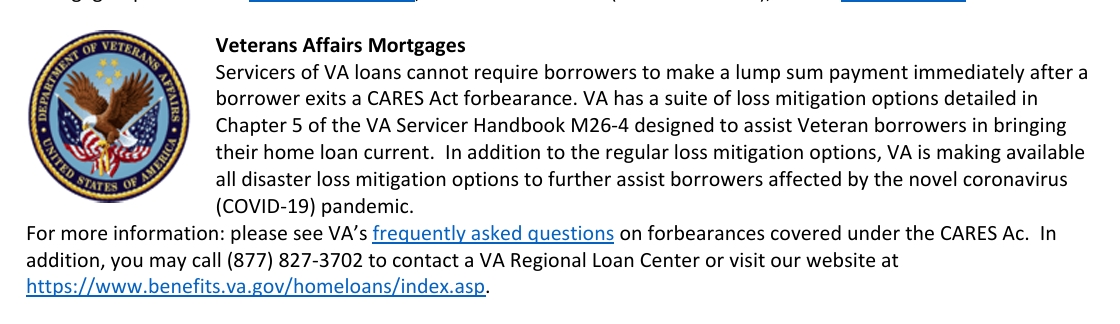
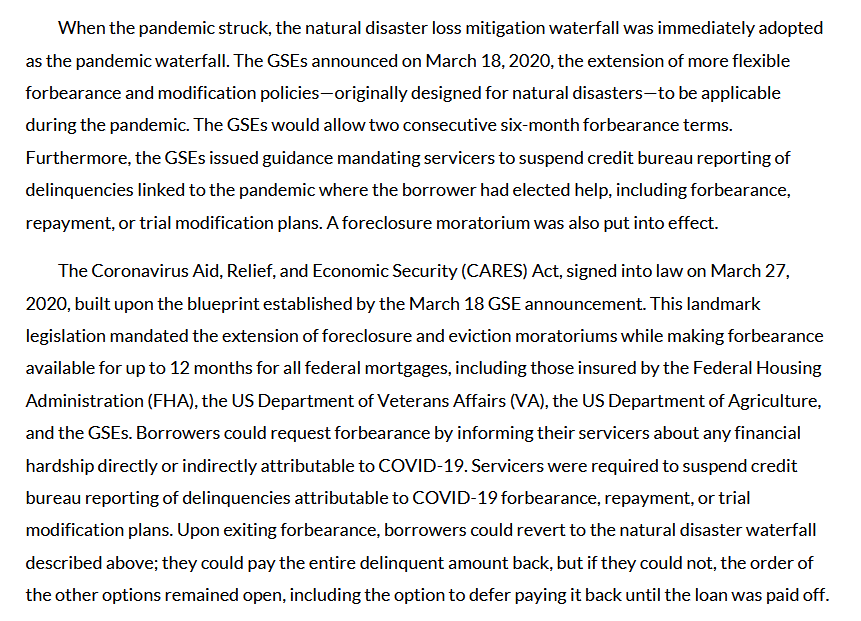
The interagency fact sheet for FHA, VA and USDA servicers states that “if the borrower requests a forbearance, a servicer must give them the forbearance requested,” that “no documentation is required to prove the hardship beyond the borrower asserting that they are suffering from a hardship,” and that “this relief is available to anyone who has a federally-backed mortgage, regardless of delinquency status.” It also records that servicers of VA loans “cannot require borrowers to make a lump sum payment immediately after a borrower exits a CARES Act forbearance.”
DOCUMENTED FACT C043
VA instructed servicers not to start foreclosure or its alternatives at Step D, and recorded in the same circular that servicers had been doing exactly that.
Circular 26-24-2 (February 9, 2024) states, in bold, that at Step D “the servicer is not to initiate foreclosure or alternatives to foreclosure at this point,” and that instead a VA loan technician reviews the file. The same paragraph records VA’s own observation: “VA has observed that, under the previous waterfall Circulars, servicers may not have fully understood Step D, and servicers may have begun foreclosure or offered alternatives to foreclosure (that is, deed-in-lieu of foreclosure or short sale) before VA had the opportunity to determine whether an option not specifically identified in the waterfall could help a borrower retain their home.” It also directs that servicers “are to refer all loans, under Step D, to VA for review if there are no other home retention options available.”
DOCUMENTED FACT C044
The COVID-19 Home Retention Waterfall’s own entry test was broader than the partial-claim test: current or less than 120 days past due as of March 1, 2020, or a loan made on or after that date.
Circular 26-24-2 §5 states servicers are to use the waterfall where the borrower missed at least one payment covered by a COVID-19 forbearance; “the borrower’s guaranteed loan was current or less than 120 days past due as of March 1, 2020, or the guaranteed loan was made on or after March 1, 2020”; and the borrower occupies the property as a residence. At Step C the target is a payment at 31 percent of gross monthly household income without VA’s total purchase exceeding 30 percent of the unpaid principal balance, and where that outcome is achievable the servicer “offers the COVID-19 Refund Modification, regardless of the percentage by which such assistance would reduce the borrower’s payment.”
DOCUMENTED FACT C045
In February 2024 VA told servicers it could purchase a delinquent loan outright under its §3732 refunding authority.
Among the assistance VA said it may offer at Step D, at VA’s sole discretion, Circular 26-24-2 lists that “VA may elect to exercise its loan refunding authority under 38 U.S.C. § 3732 and purchase a delinquent loan from the holder and assume primary servicing responsibilities,” alongside tailoring the Step A–C thresholds, allowing a variation of the VA Disaster Extend Modification, and placing a borrower on special forbearance pending the then-upcoming VASP program.
DOCUMENTED FACT C046
The servicer guidance said arrears could be paid back over time, and that a borrower could end a forbearance simply by resuming the regular monthly payment.
The interagency CARES Act fact sheet instructs servicers to “ensure that borrowers understand that the missed payments must be repaid, although it may be paid back over time,” to “educate the borrower on what options will be available to the borrower to make repayments,” and to “inform borrowers that they can contact you when their hardship is over or resume making their regular monthly mortgage payment to end the forbearance, and discuss what repayment options are available.” The same document states that servicers of VA loans “cannot require borrowers to make a lump sum payment immediately after a borrower exits a CARES Act forbearance,” and points servicers to the Chapter 5 loss-mitigation options in the M26-4 handbook.
DOCUMENTED FACT C047
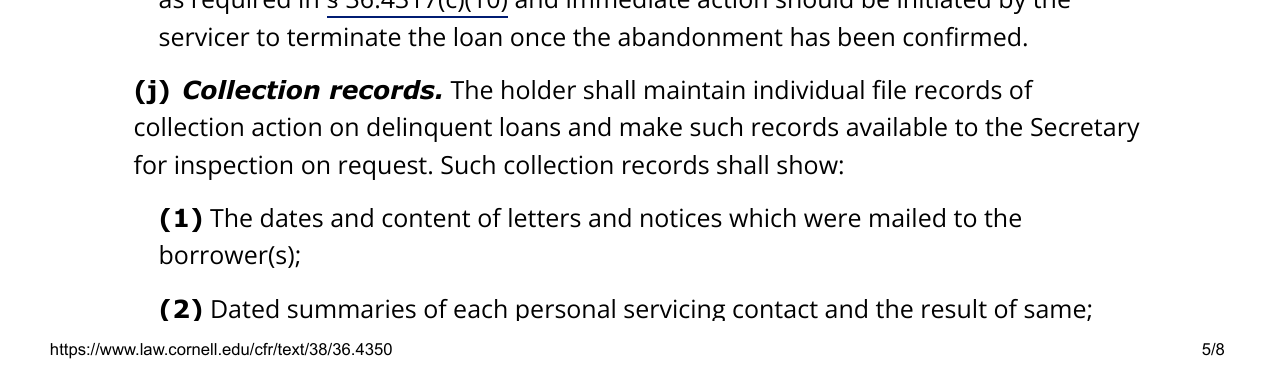
VA named its VASP authority on the record in February 2024, three months before launch: 38 U.S.C. §3732 and 38 C.F.R. Part 4320.
Asked at the February 15, 2024 hearing to “provide us right now with specific authorities outlined in statute that would authorize such a dramatic and drastic change,” VA’s Executive Director of Loan Guaranty Service answered: “Yes, sir, 38 USC 3732, as an authorization for VASP, as well as our current regulation at 38 CFR 4320.” VA also stated it “were looking for a solution to be able to help 40,000 borrowers stay off foreclosure,” and that its protocols required borrowers to “make 6 months of mortgage payments when they did a modification throughout our loss mitigation waterfall.”
DOCUMENTED FACT C048
The standard was set on the record, by the subcommittee’s own chair: whether VA has authority to keep veterans in their homes is a veterans question, not a partisan one.
At the February 15, 2024 hearing on VASP, Rep. Derrick Van Orden, chairing the Subcommittee on Economic Opportunity, said: “I have concerns now, and I do not care who is in the White House, because this affects our veterans and is not political.” His substantive objection was that VA lacked statutory authority for a below-market-rate modification, that he had “very little confidence in the Veterans Administration’s ability to effectively administer this program,” and that VA was “simply making this up.” VA answered by naming 38 U.S.C. §3732 and 38 C.F.R. 4320. Eleven months later the same program was terminated on roughly eight days’ notice, and the authority question the chair raised became the question the whole record turns on.
DOCUMENTED FACT C049
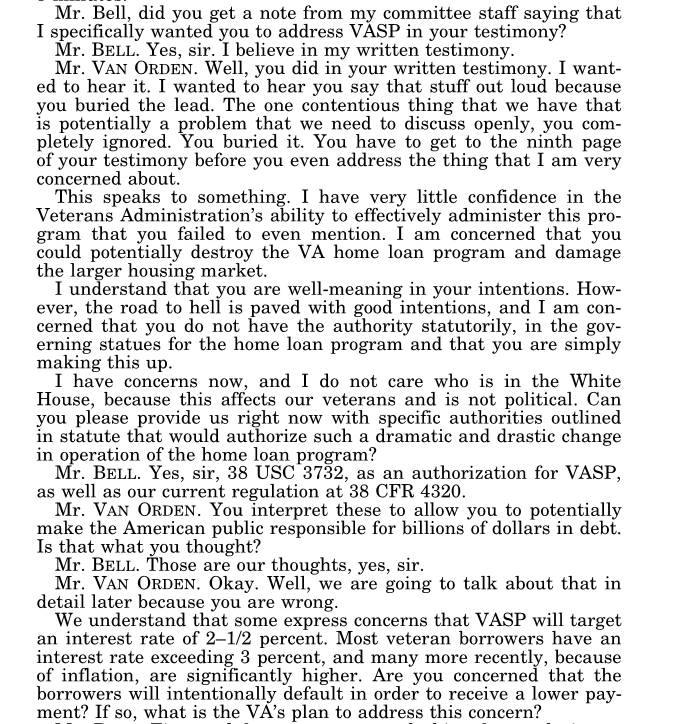
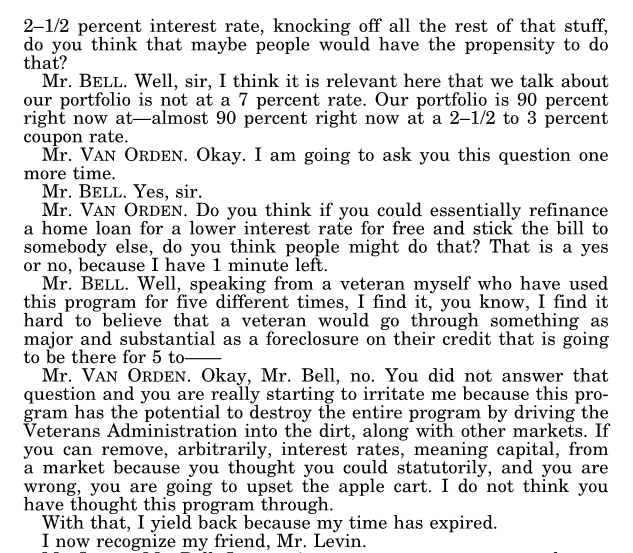
Sixteen months before the replacement was terminated, Congress and VA were already arguing about the interest rate on a modification, from opposite directions.
At the February 15, 2024 hearing the subcommittee chair pressed VA on whether borrowers might “intentionally default in order to receive a lower payment,” noting that “most veteran borrowers have an interest rate exceeding 3 percent, and many more recently, because of inflation, are significantly higher.” VA answered that “our portfolio is not at a 7 percent rate, our portfolio is 90 percent right now at, almost 90 percent right now at a 2–1/2 to 3 percent coupon rate.” The hearing record therefore shows the below-market rate treated as the objection to VASP in February 2024.
DOCUMENTED FACT C050
Veterans were told to pay the full arrears or lose the house, after VA had announced a foreclosure pause.
A veteran told NPR he had read that VA was pausing foreclosures so families like his could get help; his servicer told him “you have to pay the full amount back or you’re going into foreclosure.” The report records that the pause message “did not appear to be trickling down” to mortgage-company staff, and that the family faced about $20,000 in missed payments.
DOCUMENTED FACT C051
The alternative offered in place of a lump sum raised the monthly payment.
A veteran was told missed payments would move to the back end of his 30-year mortgage; in September he was told he owed $57,000 or could take a modification. The modification raised his payment by $1,300 a month, to $3,600.
DOCUMENTED FACT C052
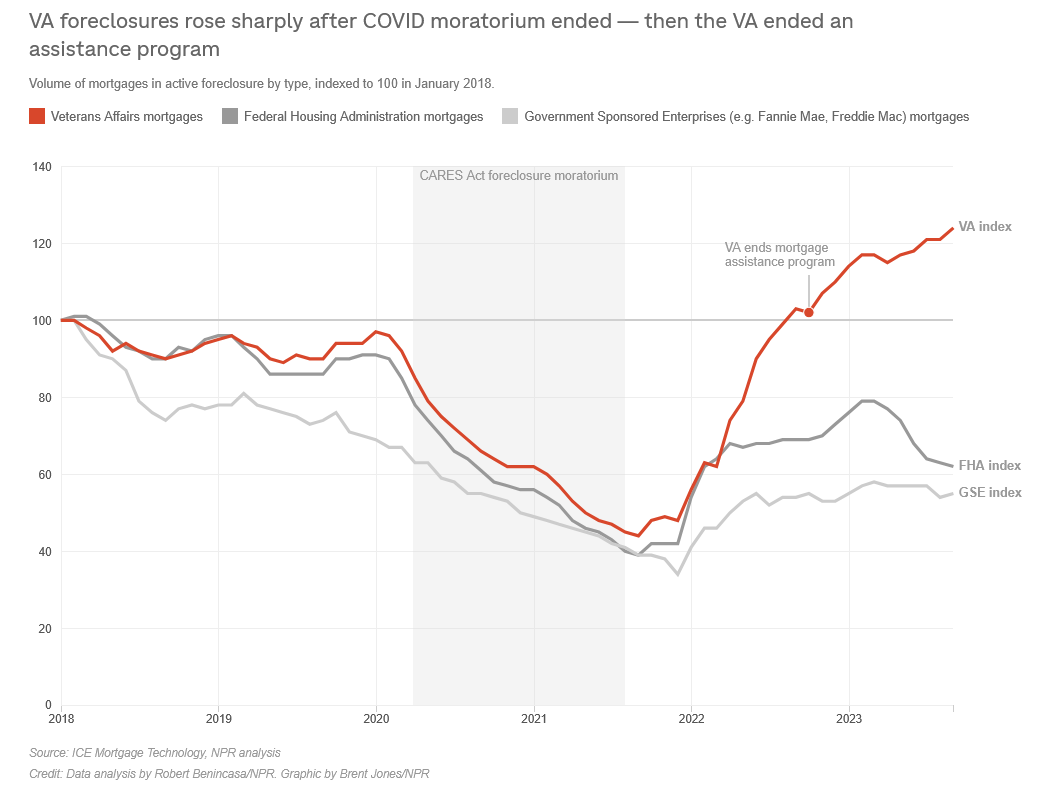
VA active-foreclosure volume diverged from FHA and GSE volumes after the moratorium ended and VA’s assistance program ended.
NPR’s analysis of ICE Mortgage Technology data, indexing active foreclosure volume to 100 in January 2018, shows the VA index rising above its 2018 level to roughly 123 by late 2023 while the FHA index fell to about 63 and the GSE index to about 55. The chart marks the point at which VA ended its mortgage assistance program.
DOCUMENTED FACT C053
VA’s 2023 foreclosure pause was temporary and ran only to May 31, 2024, with 40,000 VA borrowers in foreclosure or delinquent.
VA’s Secretary said the pause would run “through May 31 next year, 2024,” giving VA “the additional time that we need” to help veterans stay in their homes. The report records 40,000 VA borrowers then in the foreclosure process or delinquent without a modification, and the Secretary’s statement that VA had met with servicers of more than 90% of all VA loans.
PROJECT ANALYSIS C054
On the government’s own numbers, foreclosure is the spending and retention is the offset, the gates that exclude the cohort move federal money to the more expensive outcome.
CBO scored the permanent partial claim as a decrease in net direct spending with $294 million in avoided foreclosure-related payments, at roughly $27,200 subsidy cost per claim; this project’s model of foreclosing on the 31,500 veteran families in active foreclosure puts that cost near $2.3 billion. VA’s own incentive schedule caps a successful loss-mitigation outcome at $1,000 and pays its largest incentive for a short sale, while post-foreclosure evictions are filed in the Secretary’s name by a contractor under a federal contract worth up to $374.4 million.
DOCUMENTED FACT C055
The committee that ended VASP argued for the partial claim on cost grounds, and put the arithmetic on the record.
In their April 3, 2025 joint statement on the VASP phase-out, the HVAC Chairman and the Economic Opportunity Subcommittee Chairman wrote that the action “underscores House Republicans’ intent to establish a partial claims program at VA to ensure veterans’ can stay in their homes if they’re in financial hardship while still protecting the American taxpayer.” The statement’s background section sets out the comparison: “Instead of reinstituting the partial claim program for an average loan delinquency of $22,500, VA chose to purchase these loans through the VASP program at an average of $292,000”, since risen to $320,000, and states that “a partial claim program could solve the majority of delinquent loans at a much less expensive clip to the taxpayer.”
PROJECT ANALYSIS C056
Measured against the standard its own authors set, the partial claim has not yet done what it was said to do.
The April 2025 statement gave two commitments: establish a partial claim so veterans can stay in their homes in financial hardship, and protect the taxpayer. VASP ended on roughly eight days’ notice on May 1, 2025. The partial claim was authorised on July 30, 2025 (Pub. L. 119-31), its final policy published June 1, 2026, submissions opened June 15, 2026, and servicers have until November 28, 2026 to implement, more than eighteen months after the tool it replaced was withdrawn. The handbook gates written into M26-4 Chapter 22 exclude families whose default or foreclosure fell inside that window, which is the cohort the withdrawal exposed. On the second commitment, CBO scored the partial claim as a decrease in net direct spending against roughly $2.3 billion modelled for foreclosing on the 31,500 families now in active foreclosure.
DOCUMENTED FACT C057
Within six days of the VASP announcement, the ranking members of three committees of jurisdiction warned the Secretary in writing that the closure would push veterans into foreclosure.
On April 9, 2025, six days after the April 3 announcement, Senate Veterans’ Affairs Ranking Member Blumenthal, Senate Banking Ranking Member Warren and House Veterans’ Affairs Ranking Member Takano wrote to Secretary Collins in a letter signed by 22 Democrats and Independents, stating the closure was “leaving tens of thousands of veterans at risk for foreclosure” and urging him to “immediately reverse this decision, and avoid foreclosing on veterans who simply wish to keep paying their mortgage and keep their home.” In the same month Takano stated that “as many as 80,000 veterans and military families have been stripped of a vital assistance program established to prevent the tragedy of foreclosure.” In July 2025, on passage of the replacement authority, the Senate and House committee leaders stated in a bipartisan and bicameral release that the legislation “will assist veterans who are facing financial hardships and provide VA with a tool to better help veterans stay in their homes and avoid foreclosure.”
DOCUMENTED FACT C058
The Take Care of America’s Veterans Act is paid for by raising VA home loan fees and by codifying future disability-rating cuts.
H.R. 9237 / S. 4744 finances its new benefits two ways: it raises the VA refinance (IRRRL) funding fee from 0.5% to 1.42% and doubles the loan-assumption fee from 0.5% to 1.0%; and Section 108 codifies an estimated $57 billion in future disability-rating reductions for tinnitus and sleep apnea. Common Defense estimates the fee changes add more than $8,000 to the cost of an average loan over its life, on a $325,000 refinance the fee rises from about $1,625 to about $4,615. The VFW and DAV oppose the offsets. The bill is led by Reps. Bost and Van Orden and Sen. Moran.
You may have heard: “the VA isn’t the one foreclosing” →
You may have heard: “helping them would cost taxpayers more” →
Every image below is a screenshot of the primary source. Nothing here asks you to take our word for it.
Repayment section, no lump sum
Guidance to servicers
VA mortgages
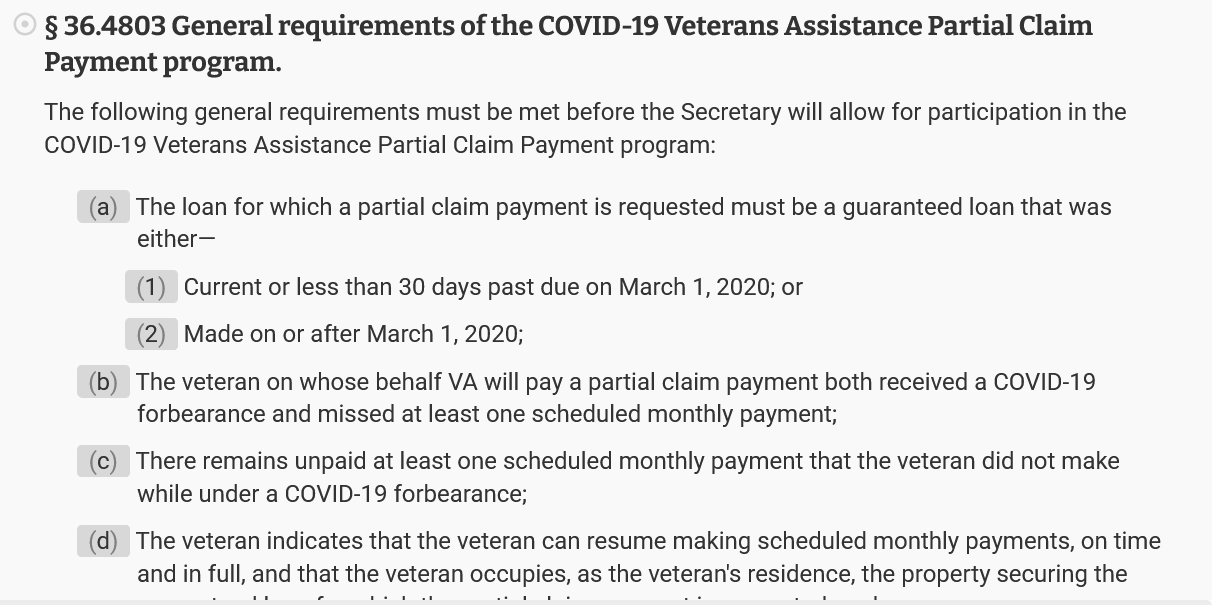
COVID-19 partial claim, general requirements
Guidance in Advance of Regulations
Loss mitigation waterfall
Evaluation of a complete application
Denial notice requirements
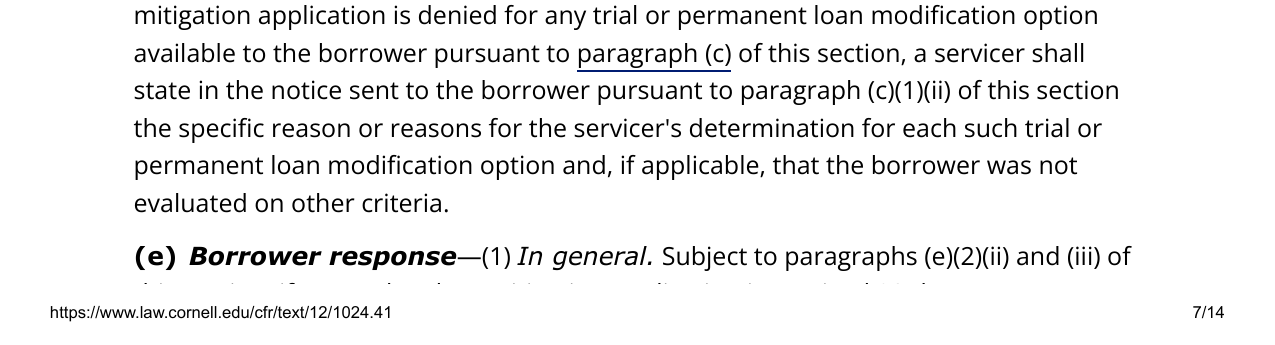
Prohibition on dual tracking
Loan modification terms
Loan modification limits
Servicer loss-mitigation options
Servicer incentive schedule
Servicing procedures for holders
On the authority question
On interest rates
Sec. Collins on the June 15 standup date.
Conclusion
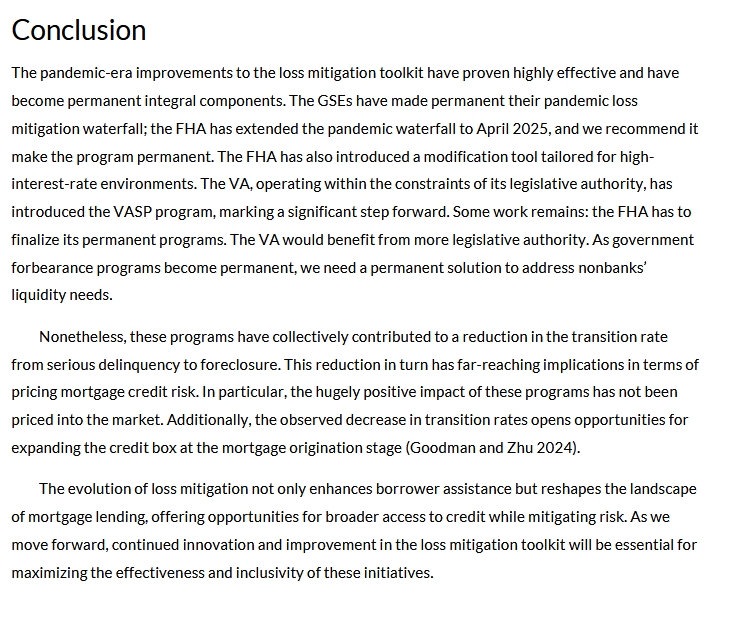
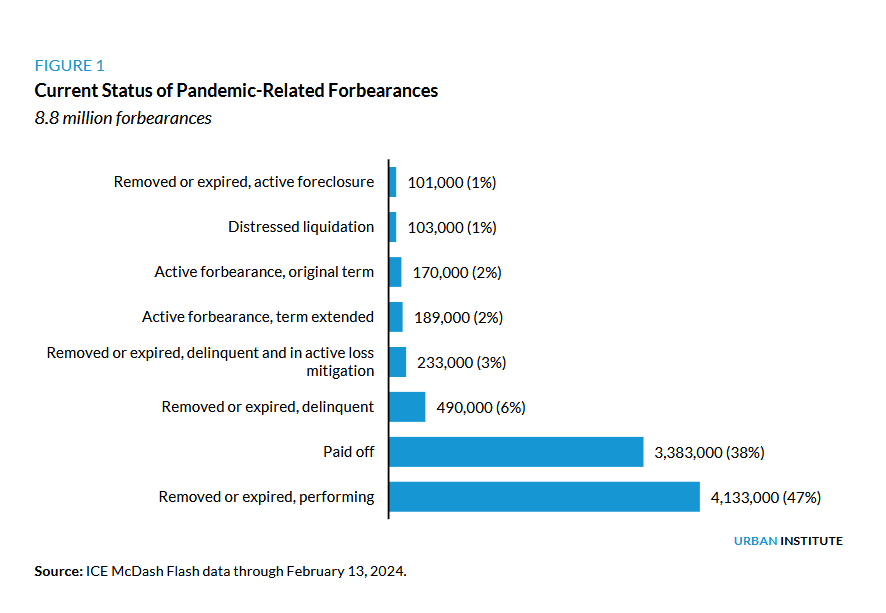
Figure 1, forbearance status
VA loss mitigation options
How VASP worked
VASP announced
CARES forbearance
Exhausted all options
What Congress must grant
Net savings projection
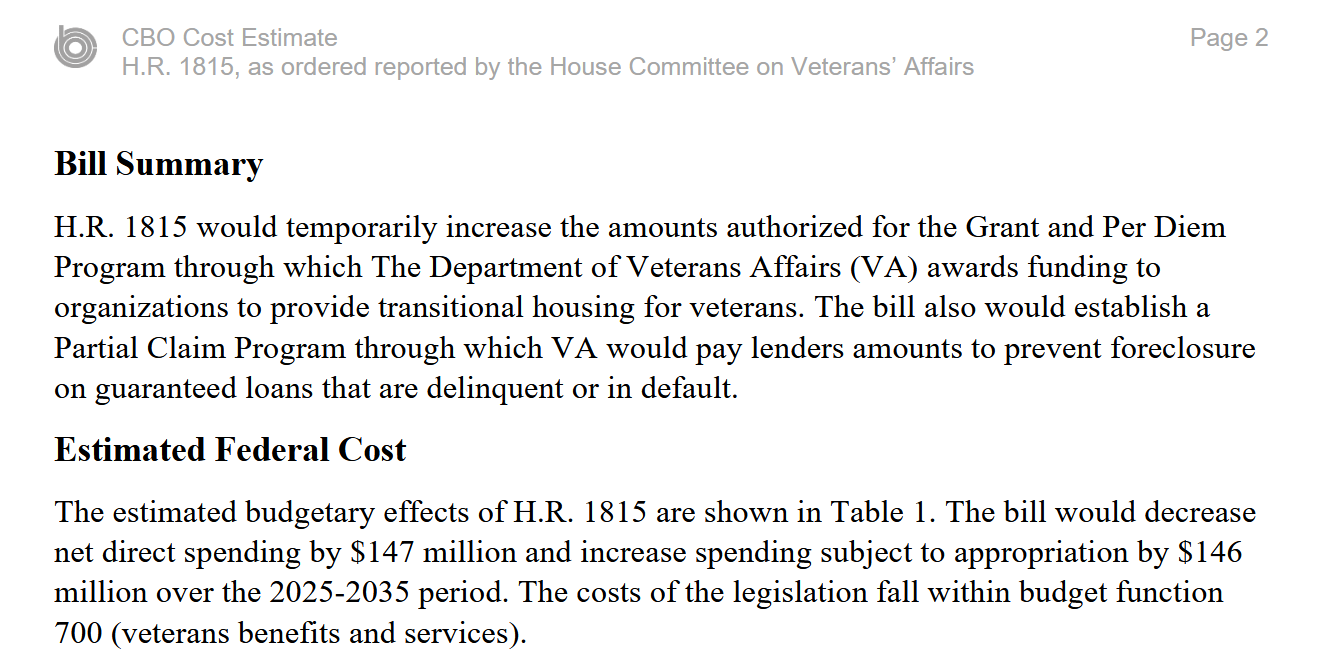
Table 1, both spending lines
Program terms assumed
Program description
Loan effects
Mandates
Contract award to Vendor Resource Management
Contract activity
Veteran foreclosure reporting
VA describes the authority as existing
VASP participation figures